
In partnership with Vin de Tahiti
Vines on a Coral Atoll: Visiting Vin de Tahiti on Rangiroa
November 9, 2026
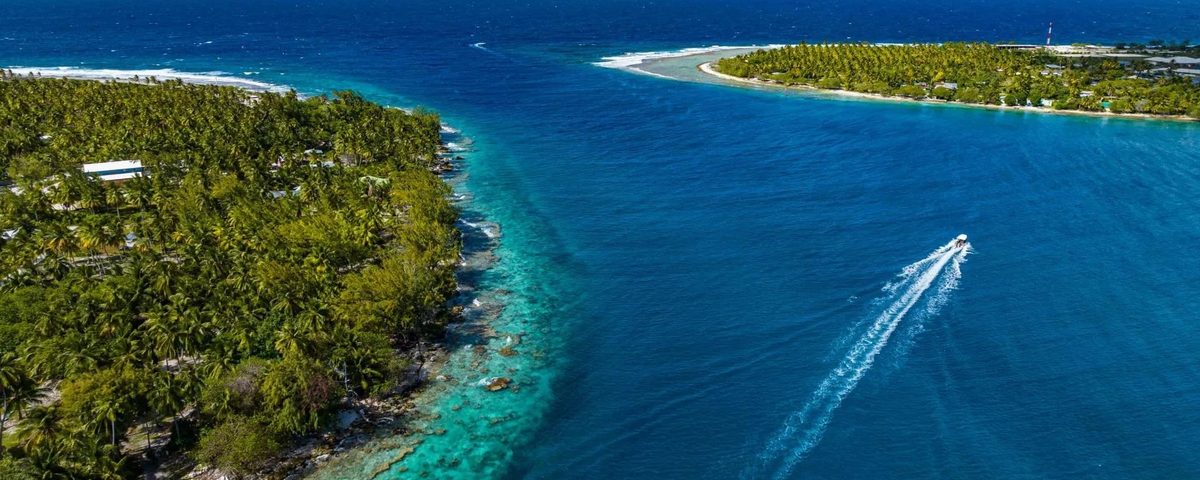
Most people fly to Rangiroa for what’s under the water. It is one of the largest atolls on Earth, a ring of coral so big that its lagoon could almost hold the island of Tahiti, and divers have known its name for decades.
But a few minutes by boat from the village of Avatoru, on a small motu fringed with coconut palms, something grows that you won’t find on any other atoll: grapevines. Vin de Tahiti calls itself the only coral winery in the world, and it is one of the most unusual places we know of to raise a glass in French Polynesia.
We haven’t made it to Rangiroa’s vines ourselves yet. It’s high on our own list, and after spending time with this story we think it belongs on yours.
An idea that sounded like a joke
The winery tells its own story with a smile: growing vines on a tropical atoll could pass for a joke, it says, like planting edelweiss. But Dominique Auroy, a French businessman, was serious when the idea came to him in 1991.
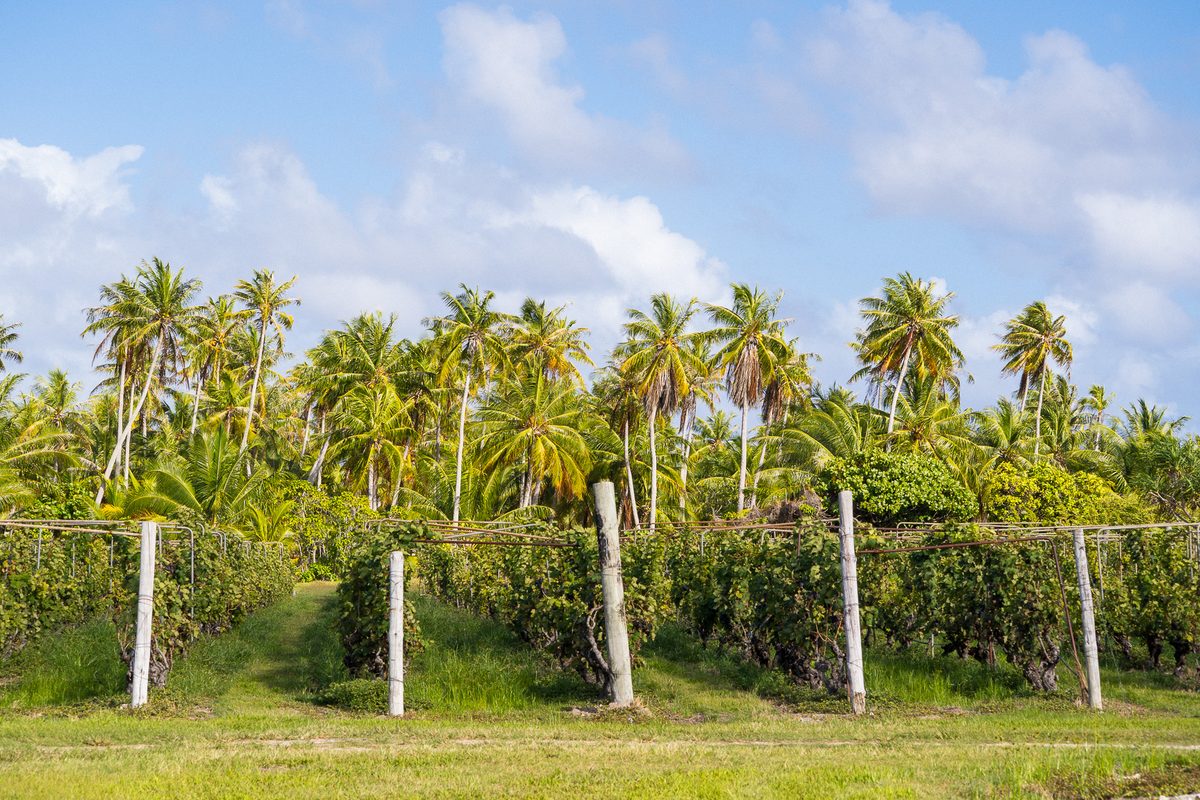
He found an ally in Bernard Hudelot, a Burgundy winegrower, biologist and professor of oenology at the University of Dijon who specialized in how vines adapt to their climate. From 1992 to 1994 the team planted trial vines in all five of French Polynesia’s archipelagos, more than 100 varieties in all, according to Robb Report, to learn where a vine could thrive. Rangiroa won. In 1997 the first three hectares went in on the motu, and the first symbolic harvest in 1999 brought in about a hundred kilograms of grapes.
Today the estate has six hectares of vines and makes about 30,000 bottles a year, according to the winery’s history. In 2016 it added two and a half hectares of sugar cane and as much again of fruit trees, coconut palms and vegetables, all part of a move toward certified organic farming.
A vineyard that runs on the tides
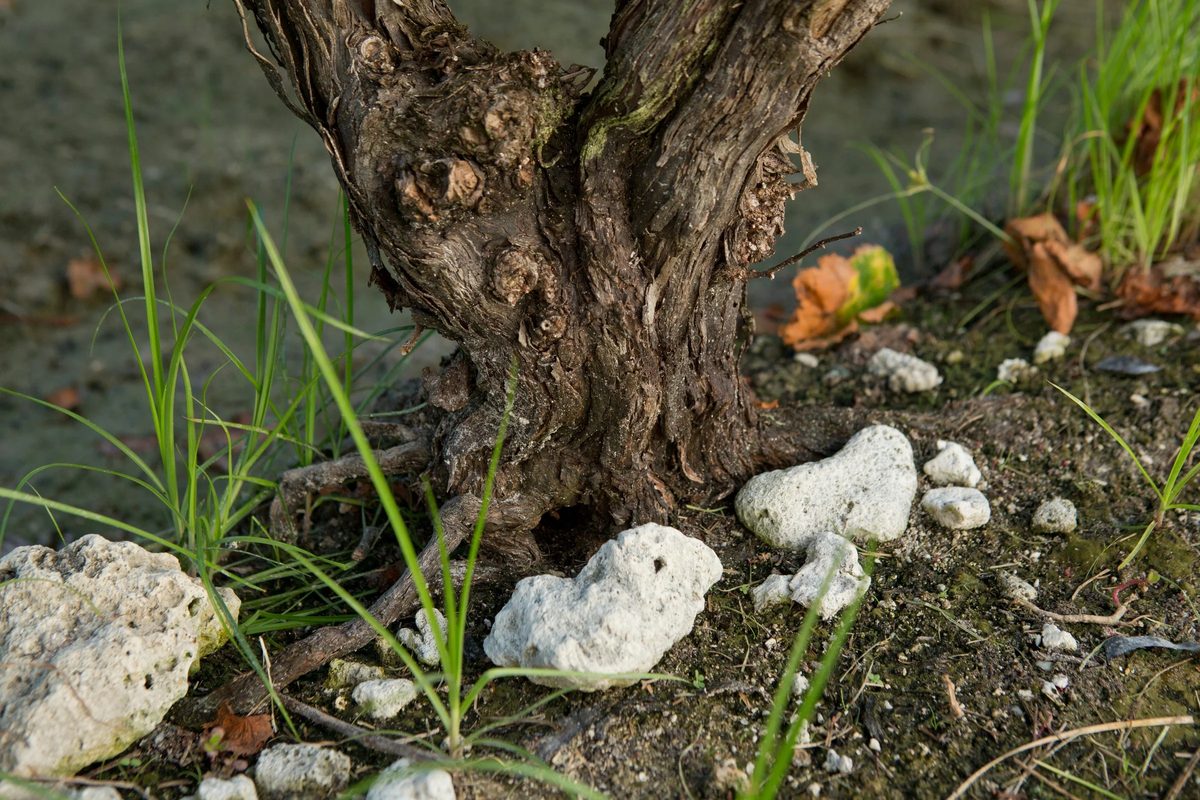
What makes this place so remarkable is the ground itself. The vines grow in coral: the decomposed skeletons of coral turn into limestone, and that limestone feeds the vines, topped up with seaweed and organic fertilizer. Land crabs, the tupa, share the rows. The winery says this deeply maritime terroir is what gives the wine its particular taste.
Water is the other secret. Under the parcels sits a lens of fresh rainwater, floating within the atoll. Its level rises and falls with the tides, and the tides in turn set the rhythm of the vineyard, including when the vines are pruned, as the winery explains.
And there is no winter. In most wine regions, vines rest through a cold season, then bud, flower and ripen once a year. On Rangiroa it is warm all year round, so the team prunes the vines hard after each harvest to send them into a brief rest, and the cycle starts again. The result is a harvest roughly every five months, twice a year, on dates that drift over time. Wine Spectator has marked the vineyard’s 50th harvest since its first in 1999.
The people behind the vines
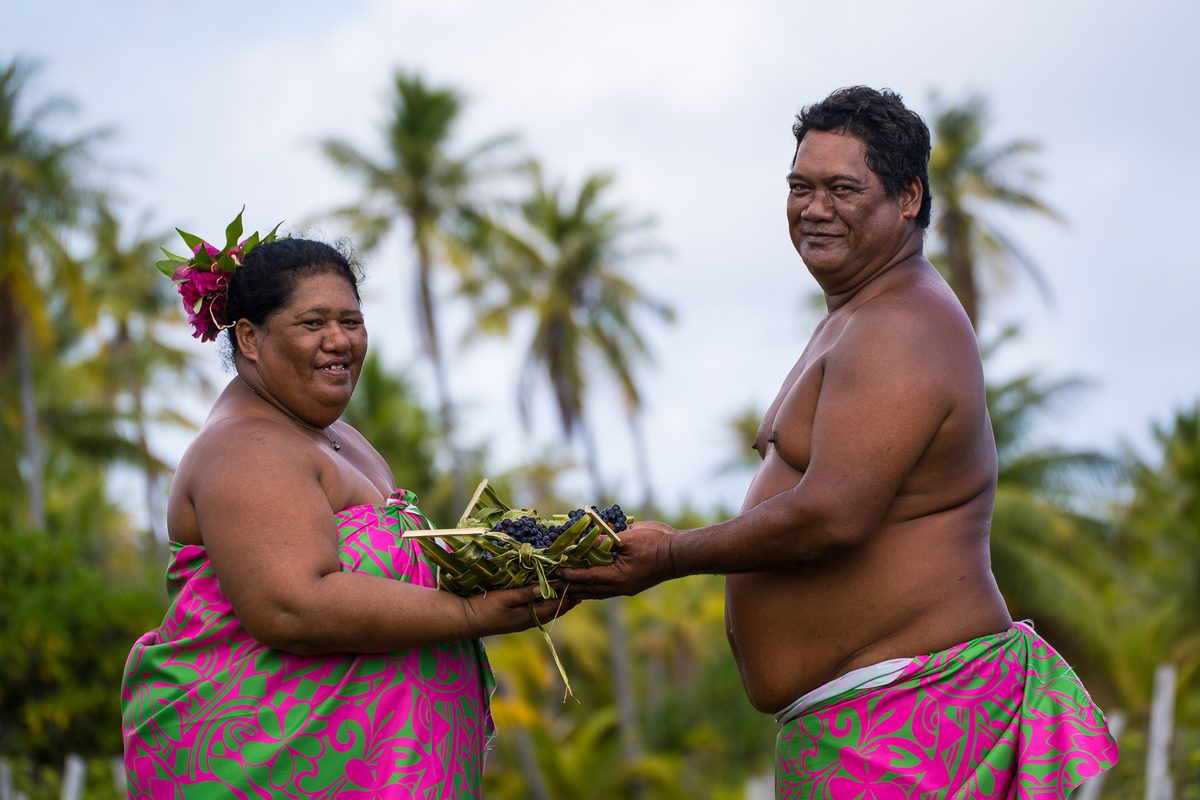
The vignerons here are Paumotu, people of the Tuamotus, whose families lived from copra, fishing and tourism before anyone planted a vine. Many are now French Polynesia’s first winegrowers, and the winery says their pride is plain to see.
Each morning at dawn the team leaves the quay at Avatoru by boat to reach the vines. Jacqueline Tuairau has been there almost from the start and is now the head of the vineyard, leading a full-time team of twelve; her husband works the vines too, and later their son joined them. In the cellar, built in 2005, the cellar master is Landry, from the Marquesas. The whole operation is run by Sébastien Thépénier, a Burgundy-born oenologist who answered an ad to come to Rangiroa in 2002. When he arrived, he told Robb Report, “It looked like a field of bonsai.”
At harvest, the grapes make the same crossing the vignerons do: crates stacked in an open boat, about ten minutes across the lagoon to the cellar, according to one visitor’s account. It must be one of the prettiest commutes in the wine world.
Tasting at La Cave de Rangiroa
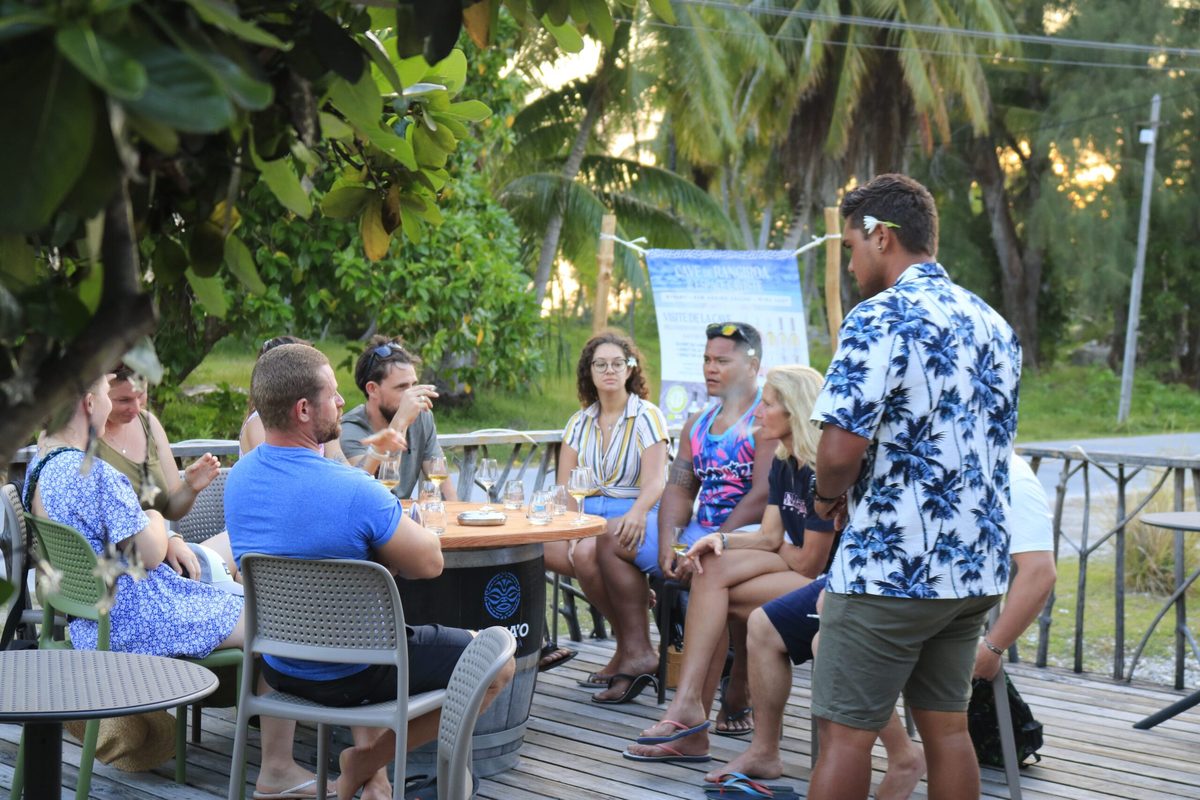
The way to experience Vin de Tahiti is in person, at La Cave de Rangiroa in Avatoru, the winery’s cellar, shop and tasting room. Book a tasting and a guide walks you through the estate’s wines: the Blanc, Rosé and Monamona de Corail and the Clos du Récif. Then you move on to something even rarer: Mana’o Rangiroa Blanc, which the winery calls the world’s first atoll rum, certified organic and made from sugar cane grown alongside the vines.
There are three ways to taste, each about an hour long:
- Vins de Tahiti and Mana’o Rangiroa: the wines plus the atoll rum, 2,500 XPF per person.
- Mana’o rums: for rum lovers, a tour of Mana’o’s range, including a rum aged a year in French oak, 2,500 XPF per person.
- The Mana’o collection: the rarest bottles, including a rum aged 18 months in Italian amphorae, a rum made from cane grown on Nuku Hiva in the Marquesas, and the last bottles of a limited aged rum kept just for this tasting, 4,000 XPF per person.
Tastings run Monday to Saturday at 4, 5 and 6 p.m. If you’d rather simply sit with a glass, the cave’s outdoor terraces take walk-ins, with no reservation needed.
Good to know before you go
- Getting there. Rangiroa is about an hour’s flight from Tahiti, and it’s an easy addition to a Society Islands trip.
- The cave and the vines are in different places. Tastings happen at the cave in Avatoru. The vines are across the lagoon on their motu, reached only by boat, so a walk through the vineyard isn’t part of the standard tasting. Some visitors have arranged a boat trip out to the vines through their guesthouse; if seeing the rows in person matters to you, ask well ahead.
- Book the tasting. Reserve through the winery’s website, by email at rangiroa@vindetahiti.pf, or by phone at +689 40 46 35 00.
- Make a day of it. Pair a morning dive or snorkel with an afternoon tasting. The last slot of the day lands nicely toward sunset.
- Watch before you go. France Télévisions’ Positive Outre-mer has a short look at the vineyard, and the winery’s own site is full of photos from the motu, including the ones in this story.
A different kind of island story
French Polynesia is full of places that are beautiful the moment you see them. Vin de Tahiti is something else: a place that’s beautiful once you understand it. There is the stubbornness of an idea everyone thought was a joke, the vignerons crossing the lagoon at dawn, and the vines rooted in coral and timed by the tides. Every glass on the terrace in Avatoru carries all of that.
Rangiroa’s name means “immense sky.” We can’t think of a better place to sit under one with a glass of wine made right there in the lagoon.