In partnership with Dive N’ Smile
Face to Face with Bora Bora’s Manta Rays: Diving with Dive N’ Smile
November 2, 2026
This February my husband and I went back to Bora Bora for our 20th anniversary. Twenty years earlier, on our honeymoon, we had looked at that lagoon mostly from above. This time we wanted to see what was under it.
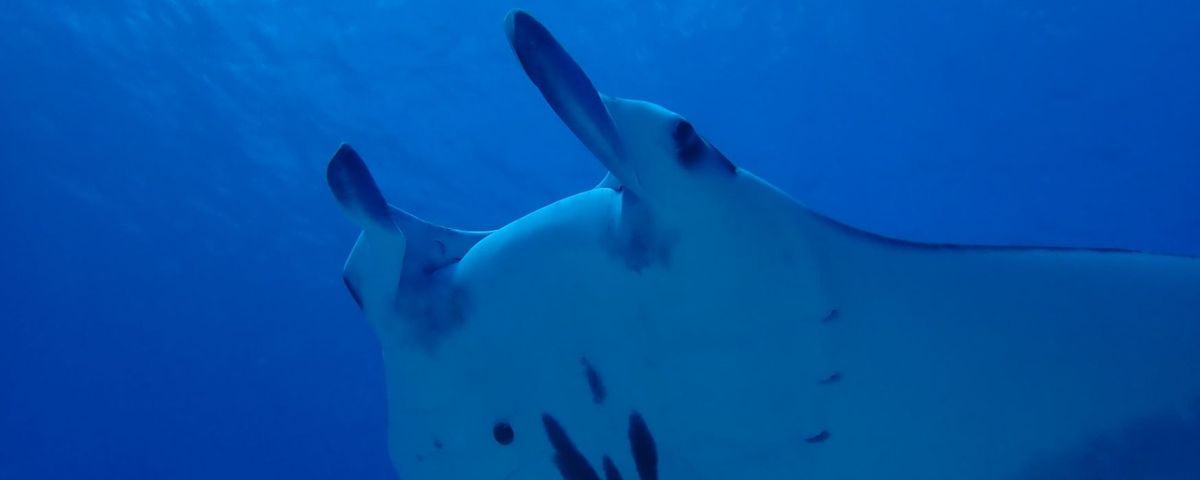
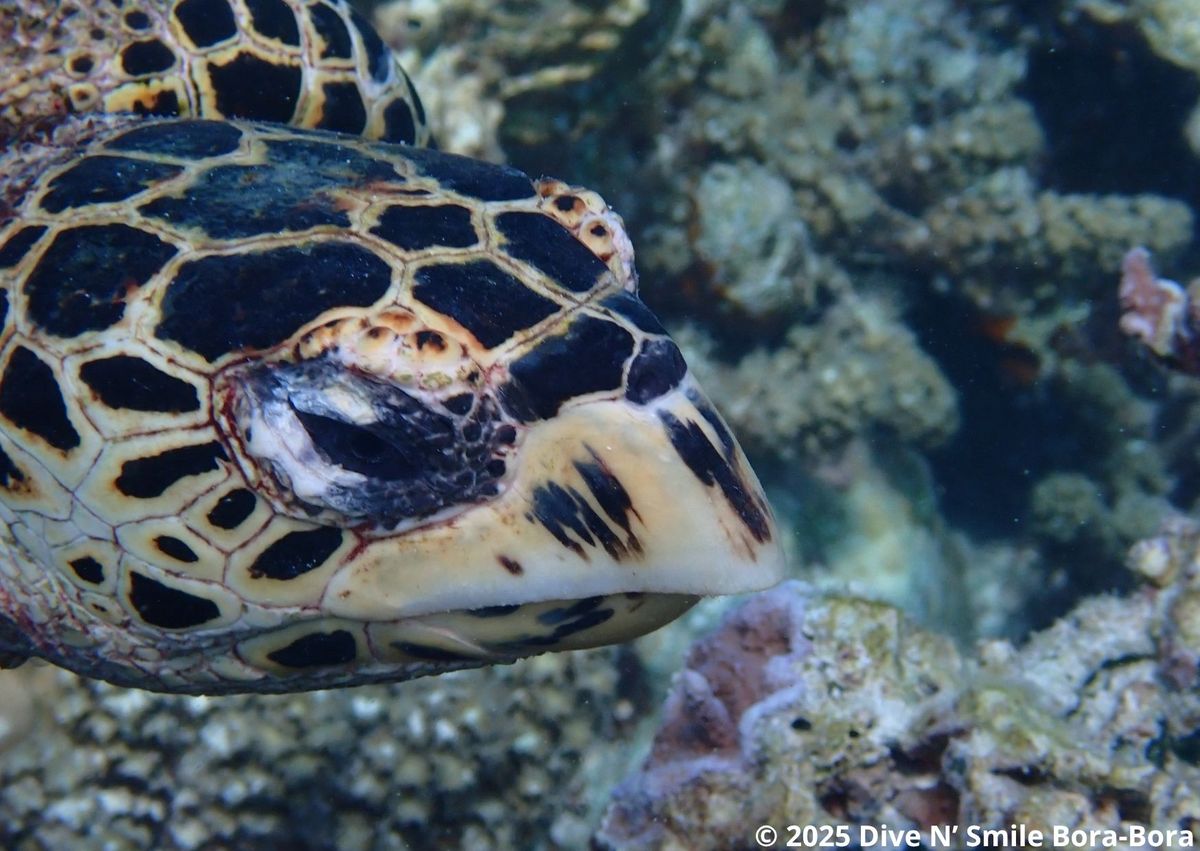
So we went diving with Dive N’ Smile, and it turned out to be one of those mornings you keep replaying for months. We swam through what felt like mountains of coral, and then the manta rays came. Not a distant shadow at the edge of the blue, but close: close enough to see the spots on their bellies and the slow, easy way they move their wings. It was breathtaking.
That dive is the reason for this story.
Two instructors, one small dive center
Dive N’ Smile is a small, independent dive center that has been running in Bora Bora since 2013. It is run by Justine and Patrick, two instructors who handle everything themselves. There is no rotating cast of staff: the people who answer your message are the people who brief you, take you down and bring you back up.
They put their priorities simply: diving that is safe, educational and enjoyable, with quality before quantity. In practice that means small, well-organized groups, and flexible schedules so they can reach the sites before other divers arrive. They use eco-friendly moorings rather than dropping anchor on the reef, and their briefings cover the marine life you’re about to see, not just the dive plan.
Meeting a manta
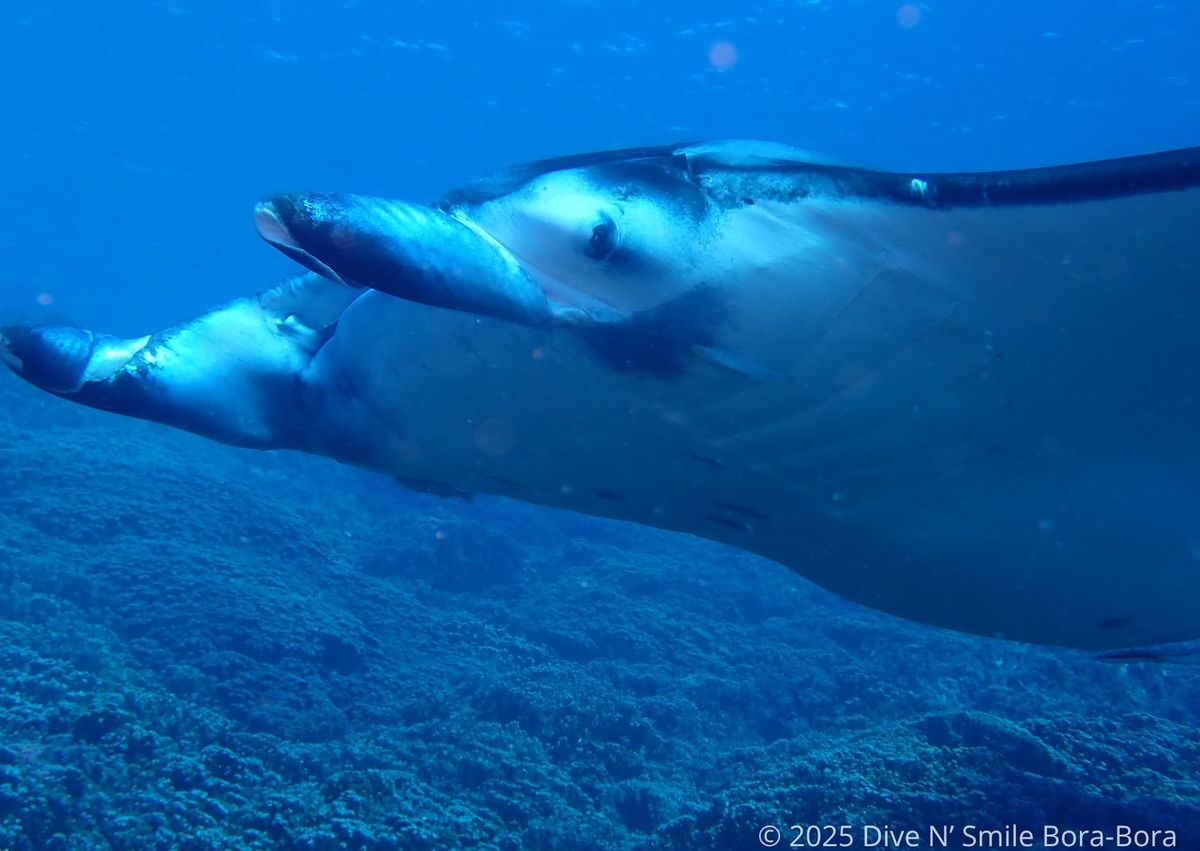
There are two kinds of manta ray in French Polynesia, reef mantas and oceanic mantas. The ones you are most likely to meet in Bora Bora are reef mantas, which are easiest to see inside the lagoons. The lagoons make ideal cleaning areas, places where mantas come to have small fish pick them clean.
Every manta has its own pattern of dark spots on its white belly, and that pattern doesn’t change over its life. It works like a fingerprint, and it is how researchers can recognize the same manta from one year, or one decade, to the next. So if you see a manta from below, as we did, you are looking at its name tag.
What researchers are learning about Bora Bora’s mantas
Dive N’ Smile isn’t affiliated with the Manta Trust, a UK-based manta conservation charity, but the Trust’s work is the best way we know to understand what you’re seeing. Its French Polynesia Manta Project has been a Manta Trust affiliate since 2015, and data on Bora Bora’s mantas goes back to 2002, when a local project started collecting it. A few of the things they’ve found:
- More than 1,100 reef mantas were identified across French Polynesia between 2001 and 2023, and three of them have been followed for over 20 years.
- They come back. Some islands show very strong site fidelity, with up to 93% of mantas seen again.
- The lagoons may be a nursery. Researchers have recorded courtship lasting weeks, many pregnant females and about a dozen babies counted in the lagoons, which suggests French Polynesia could be a nursery ground for reef mantas.
- They travel. At least 40 mantas have been seen at more than one island, and one was photographed at two islands 400 kilometers apart.
Popularity has a cost, though. Bora Bora is French Polynesia’s most visited island, and the project reports heavy boat traffic around the mantas, harmful behavior by some visitors, and injuries, including a manta hurt by a boat propeller in 2022. Mantas are listed as a protected species under French Polynesia’s environmental code, but there are no official rules yet for how people should behave around them. The project works with snorkel guides and with Bora Bora’s middle school, and hopes every tourism operator will follow the Manta Trust’s code of conduct.
How to be a good guest
The short version, wherever you meet a manta:
- Don’t touch. Mantas are covered in a protective coating, and touching them can damage it.
- Don’t chase. Stay calm, keep your distance and let the manta decide how close to come. Ours came closer than we ever expected.
- Stay low and still at a cleaning station. Give the manta room to circle and don’t block its path.
The Manta Trust’s Swim With Mantas guide has the full code of conduct, and it’s worth a look before you go.
Never dived before?
You don’t need to be certified to dive with Dive N’ Smile. Their introductory dive is open to anyone from age 8. It’s capped at 6 meters, and an instructor takes a maximum of two people. After a briefing you spend at least 40 minutes underwater, which is plenty of time to forget you were ever nervous.
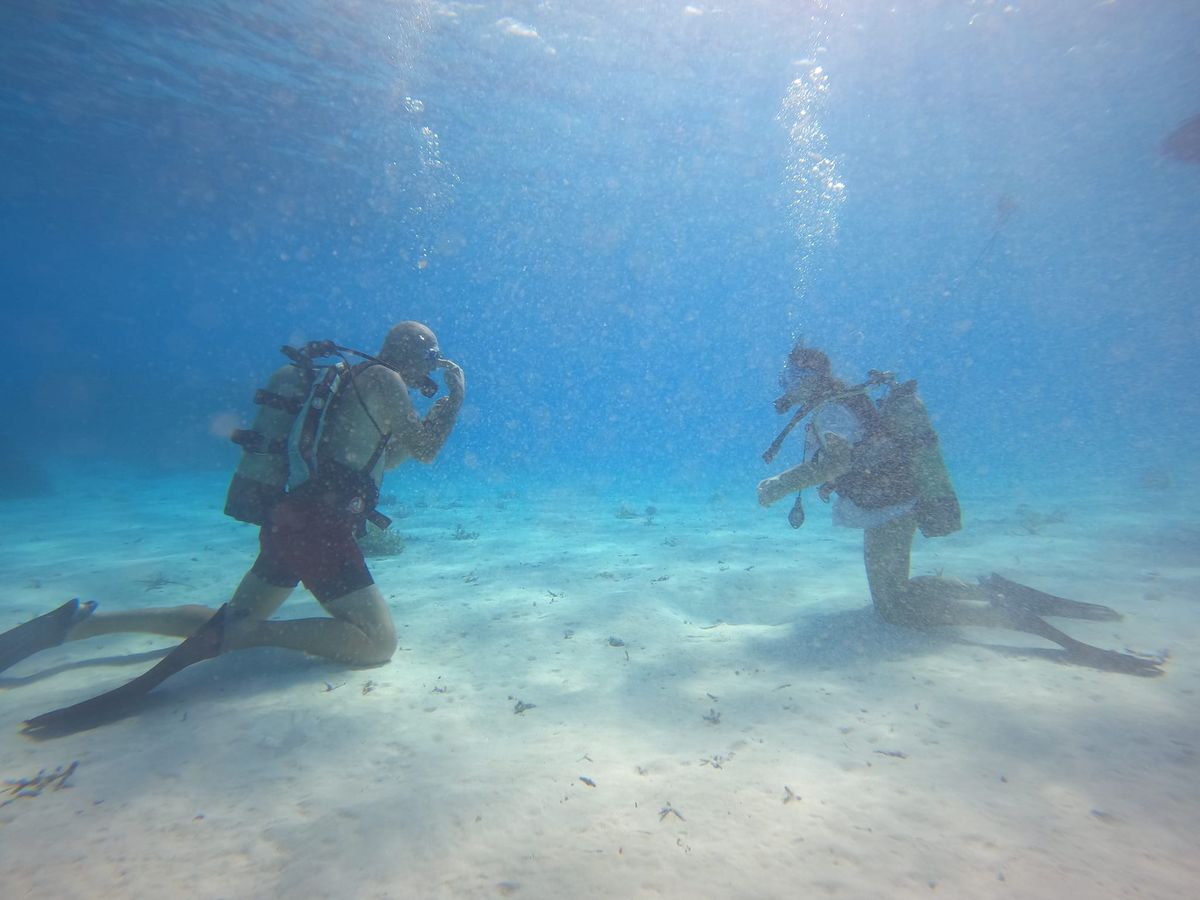
If you catch the bug, they also teach the French diving levels, from Level 1 (supervised to 20 meters, from age 12) up to Level 3 (autonomous to 60 meters, from age 18). Certified divers can book a single fun dive or a double that takes in two sites in one half day, with a snack break in between.
There are a few ways to make it more personal, too:
- A private boat for up to four people, with a personalized briefing, a snack and complimentary underwater photos. It’s a lovely idea for a honeymoon or anniversary.
- Sunset and night dives, or a special request of your own, for groups of four or more.
Good to know before you go
- They come to you. Dive N’ Smile picks up on the main island, on the motus or from your own boat, so it works wherever you’re staying.
- Bigger tanks. They use 300-bar tanks, and say they’re the only dive center in Bora Bora that offers them.
- Mind the cancellation window. Cancel more than seven days ahead for a full refund or a new date; inside 48 hours there’s no refund, except in cases of force majeure.
- Read the reviews. See what other divers say on TripAdvisor.
- See for yourself. The Dive N’ Smile website has their dives, courses and a gallery of photos from the lagoon, including the ones in this story.
Why it stays with you
Bora Bora is famous for what it looks like from an overwater bungalow, and it deserves to be. But the lagoon is even better from below. With a small team like Justine and Patrick’s, you get it without the crowds, and with people who care as much about the mantas as you will once you’ve met one.
Twenty years after our honeymoon, the island still had something new to show us.